Aromatopia 44
Ms. Yumiko Inoue, Trinity Hospice Volunteer:
“I am supported by the patients' smiles.”
Aromatopia interview











Aromatopia 44
Ms. Yumiko Inoue, Trinity Hospice Volunteer:
Aromatopia interview
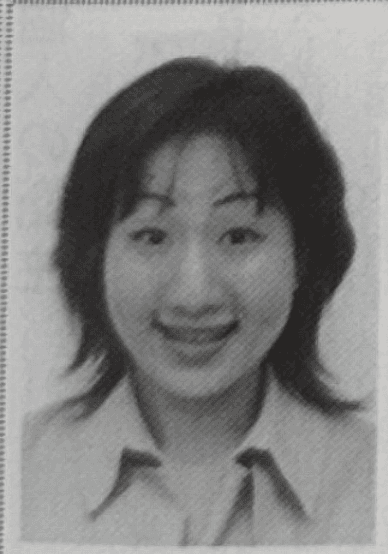
Graduated from Otsuma Women's University, Faculty of English Literature. Has worked at Bridgestone, Gendai Travel London, and as assistant producer at a production company. Studied at Herbert House for two and a half years. Graduated from the Tisserand Institute, the Bailey School of Reflexology and other courses include Indian Champissage, Manual Lymohatic Drainage, Reiki, Post-Graduate Advanced Clinical Aromatherapy and Oriental Diagnosis. Currently working at a health spa, health club, and has been volunteering at Trinity Hospital since January 2000. Started psychotherapy at Chiron Center for Body Psychotherapy in September.
This time, we'd like to introduce two Japanese aromatherapists who volunteer at a London hospice. Both graduated from the Tisserand Institute and completed Clare Maxwell-Hudson's Cancer Care (Aromatherapy course). They are currently working at Trinity Hospice in London. (Interviewer: Fusae Takahashi)
Takahashi: You are volunteering at Trinity Hospice's Day Centre, aren't you. Could you tell us a bit about the day care?
Inoue: Trinity Hospital's Day Centre has a set age range for its users, and the day I visit, which is Tuesday, is Senior Citizen's Day. A patient's day at the Day Centre begins with picking them up by hospice staff, spending five hours from 10:00 AM to 3:00 PM. Exercise and art therapy are offered, and lunch is provided. Approximately 20 people, each who are able to live a normal life, can participate in the Day Centre, and are being offered some exercise or art therapy. Because the hospice is a government-funded medical facility, admission and Day Centre participation fees are free. However, due to financial difficulties, patients cannot attend the Day Centre for extended periods. Every three months, a discussion is held regarding the patient's condition, and whether they should remain. Those whose condition improves are no longer allowed to attend. However, upon realising that they cannot participate in art therapy or meet with friends with whom they can confide, their condition can worsen significantly. The art therapy here is excellent, and perhaps due to the high quality of the therapists, each patient finds joy in creating their own work, resulting in a very high level of completion. Each session involves creating a different piece of art, such as pottery or embroidery, which are then sold to raise funds for the hospice. Last March, the hospice hosted a masked party at a famous London hotel, and the patients made the most beautiful masks for it. Sales of the masks totaled 69,000 pounds (approximately 14 million yen). I still can't forget the sight of the patients earnestly making masks, and it makes me a little sad to think of the people who have now passed away.
Takahashi: What do you pay attention to when providing aromatherapy in hospices?
Inoue: For example, in the case of breast cancer, touching within 2.5 cm of the cancer site is prohibited. In my cancer course at school, I was told not to touch the area of metastasis, but because many patients with lower back metastasis experience pain and request massages, We are allowed to gently massage (effleurage) at the Trinity Hopsice. Also, because of metastasis, the muscles around bones get stiff so it is good to massage them to loosen them up. I've heard that this is not allowed at other hospices, but I heard the same thing at a conference.
Takahashi: What essential oils do you use?
Inoue: We use around 20 essential oils at our Day Centre. Lavender, Geranium, and Marjoram are popular. In the summer, refreshing Cypress and Juniper are popular. For anxiety and worry about illness, we often use calming Frankincense. Bergamot, an oil that boosts the immune system, is also popular. It can lift the spirits if you feel tired or sleepy. We also use Ginger often, but it can be too strong for some people. Neroli can be used in cases of shock, and Petitgrain can be used in a similar way. I usually ask patients about their mood and pain on the day, and let them smell different essential oils, and then I decide two essential oils based on their preference and my intuition.
Takahashi: What is the concentration of essential oils?
Inoue: It's 1%, which means you'll use one drop of each of the two essential oils in 10ml.
Takahashi: Are there any other uses?
Inoue: Due to the cost involved, the hospice prohibits making creams or oils for personal use. I have purchased diffusers for home use, for patients, and in those cases I have asked patients to use relaxing Lavender or Roman Chamomile. (At the other Hospice, I advised patients, who cannot sleep due to pain or anxiety, to use Lavender in their baths or to put to drop a Lavender essential oil on their pillows.)
Takahashi: Which parts of the body do you massage most often?
Inoue: I often treat shoulders (due to stiffness), hips, and legs (many patients suffer from arthritis). For those who recently had a heart attack, I treat their left hand for heaviness. For those who are having trouble sleeping, I provide a gentle, relaxing massage. For those who are taking large amounts of morphine for pain, I try to provide an energising massage. However, I'm worried that in this case, it might cause sleeplessness.
Takahashi: What is the most rewarding thing about working at a hospice? What has been the most difficult thing so far?
Inoue: Everyone is so grateful for receiving aromatherapy. It's wonderful to know that I've done something to make others appreciate it. The sad part was that I was too busy, also too shy, to ask patients who seemed to want a massage. This person eventually began using a walking stick and passed away a short time later. I still regret not having mustered the courage to say something. Also, a man with prostate cancer who recently passed away had metastasized to his tailbone, causing pain around that area. He always looked forward to my visits, and when he saw me, he would wave and wait for me from afar. I felt that he needed me, but his sudden passing left me feeling incredibly helpless.
Takahashi: Do you have any more comments?
Inoue: Complementary medicine is widely adopted in hospitals and health care facilities in the UK. Coordinators act as a bridge between us complementary medicine practitioners, and doctors and nurses, facilitating effective communication. This allows for a strong network of volunteers and nurses. Even those who aren't trained in Western medicine, like me, are welcome to practice if they complete the required courses. Building trusting relationships with patients is not difficult at all. Through aromatherapy or reflexology, The satisfaction of knowing that you are doing something good, is indescribably wonderful. Even if I only give them massage for a short time, patients are quick to respond well, and I'm encouraged by their smiles as they say they feel reborn after a treatment. I learn so much from the elderly woman who can't help but hug and kiss me, and from the patients who leave the therapy room looking forward to seeing me again in a week. I can't help but hope that complementary medicine will be increasingly adopted in Japan in the near future, at hospitals, hospices, and other medical settings.