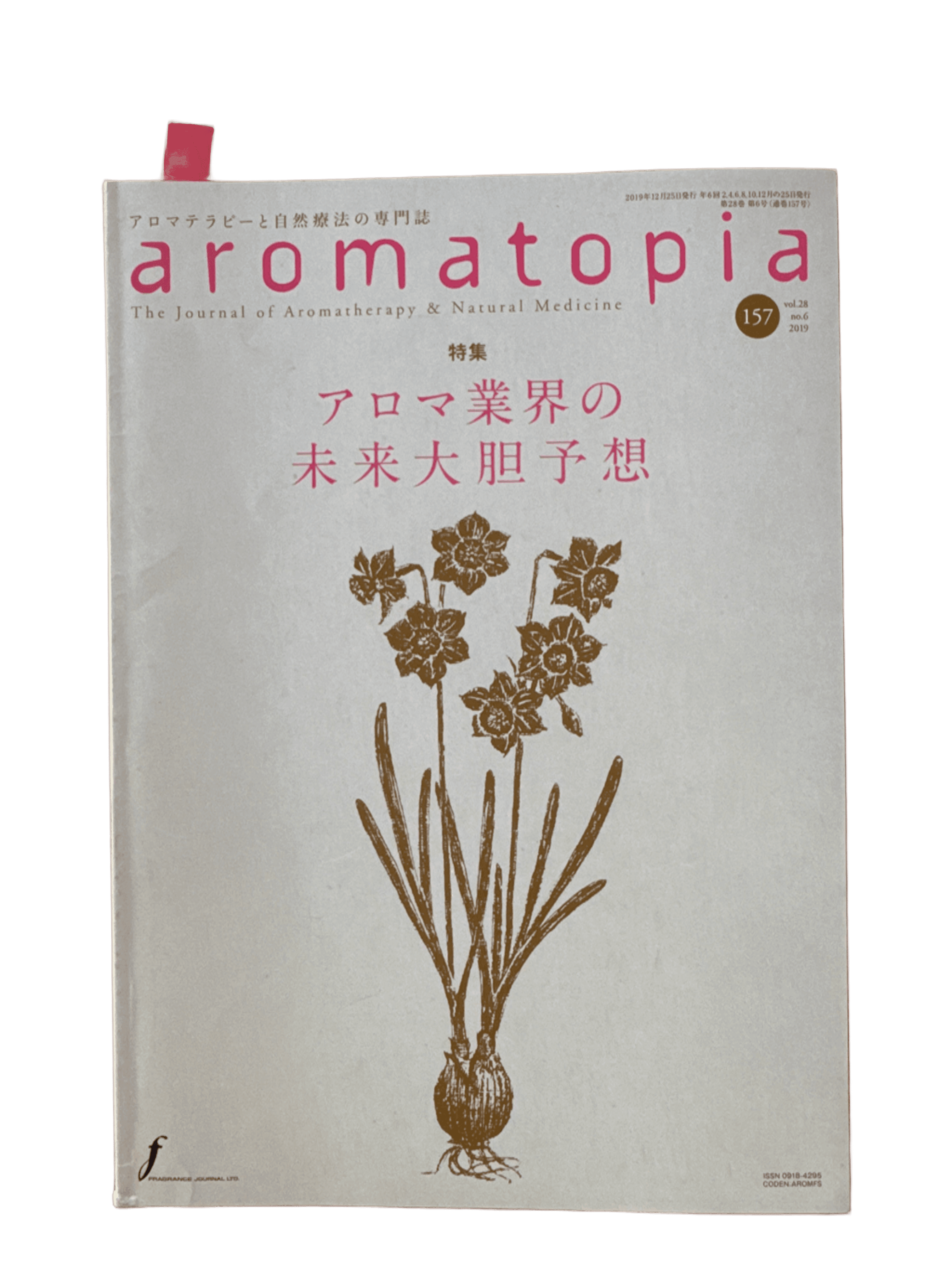
Aromatopia 157
The aroma industry, from the past to the future
Complementary medicine in the UK
By Aromatherapist
Yoko Kijima








Aromatopia 157
The aroma industry, from the past to the future
By Aromatherapist
Yoko Kijima
In the UK, aromatherapy and other complementary medicines have a deep-rooted history and tradition, and are still practiced by many people today. In this article, I will explore the history of aromatherapy in nursing and caregiving in the UK, drawing on my experience working as a volunteer therapist at the Royal Free Hospital, while also exploring the future possibilities for the field of aromatherapy in Japan.
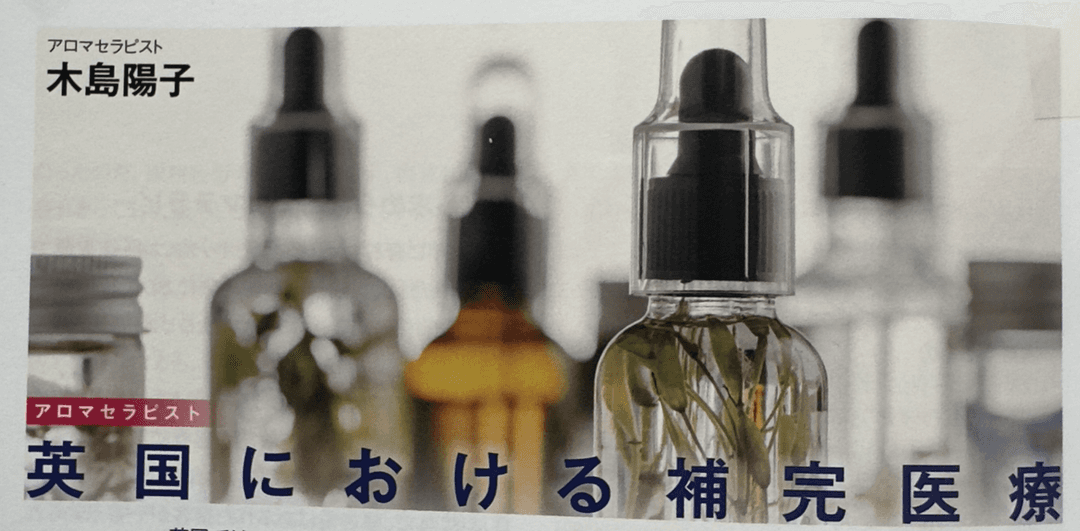
In 2012, I qualified as an IFPA aromatherapist at ITHMA (The Institute of Traditional Herba Medicine and Aromatherapy), headed by Gabriel Mojey. After a family member fell ill and I found myself needing care, I decided to experience the UK, where complementary medicine is at the forefront, and apply it to the care of my family. In 2018, I returned to the UK. There, I visited the Royal Free Hospital, where Keith Hunt works as the complementary medicine team leader, and was fortunate enough to have the opportunity to volunteer as a therapist. I currently work as a former observer under his tutelage, visiting each ward with senior therapists.
In this article, I would like to explore the development of aromatherapy and offer my thoughts based on information I gained from interviewing Keith, attending a lecture by clinical aromatherapist Rhiannon Lewis, and speaking with people working in the field of complementary medicine at a UK hospice.
One of my mentors, Keith, said, "Clare Maxwell-Hudson can be said to be one of the pioneers in the early days of aromatherapy in nursing and care." Claire's book, "The Aromatherapy Massage Book" (Japanese edition: Kawade Shobo Shinsha, 2003), was a bestseller at the time. In a television interview about the book, Claire argued, "During World War I, clinical massage was performed in hospitals. This massage should be brought back to existing hospitals." It was this statement that first led Charing Cross Hospital to approach Claire for cooperation.
Students enrolled in her school's nursing aromatherapy course were required to complete a case study in an actual hospital before graduating. Therapists who graduated were immediately ready to work in hospitals and hospices, and Keith was one of them.
Keith, who has a personal relationship with Claire, says that although Claire is not a medical professional, her touch was truly amazing. Yumiko Inoue, a graduate of Claire's school and currently living in the UK, has over 20 years of experience as a therapist and has also worked as a complementary medicine therapist at the Royal Trinity Hospice. She currently runs three salons, specializing in lymphatic drainage and reflexology.
In addition, Shirley Price and Len Price, authors of "Aromatherapy for Professionals" (Fragrance Journal, 2009), which focuses on nursing and caregiving, and several other dedicated therapists, have been instrumental in boosting the industry through grassroots efforts and playing important roles as opinion leaders.
Inspired by Claire, Keith established a complementary medicine team at the Royal Free Hospital in the early days of aromatherapy for nursing and care. Although he faced many challenges at first, through years of hard work and a proven track record, he has become a clinical aromatherapist highly trusted by the hospital's doctors.
Known for his devotion to his family, Keith said in his retirement speech in March 2019, "My wife may have thought she was married to a Royal Freedom Heart." Keith's passion and ambition for complementary medicine led to him being awarded the Order of the British Empire in 2013.
It was doctors working at the Royal Free Hospital who recommended Keith for the Order of the British Empire. After graduating from Claire's school, Keith continued to work as a teacher and patron at her school. Many of his students are now key therapists in the Royal Free Hospital's complementary medicine team.
Aromatherapy massage, a form of complementary medicine, is now available in every ward. Therapists use an organic oil called "Hosvital Blend" and perform the treatment under the direction of doctors and nurses.
Rhiannon Lewis is an evidence-based aromatherapy practitioner and researcher dedicated to the chemical research of essential oils in the field of nursing and care aromatherapy. While working as an ICU nurse in a UK hospital, Rhiannon felt that the distance between her and her patients was increasing with each promotion. She began to question the possibility of providing more patient-centered care, and discovered holistic aromatherapy.
As she continued her studies, Claire approached her to help create the essential oil analysis pages for her book, "Aromatherapy Massage Book." Writing this book deepened their friendship, and Rhiannon began teaching at Claire's school. Rhiannon was also a close friend of Shirley Price.
It's worth noting that Rhiannon proposed the introduction of aroma sticks to the cancer ward at the Royal Marsden Hospital. Aroma sticks have a small hole in the center from which the scent emanates. Patients enjoy the convenience of being able to choose their own scent. They're also portable, meaning they can enjoy their favorite scents with them at any time during their hospital stay. The introduction of these sticks has significantly improved the quality of life for patients on the ward. When asked what inspired her to come up with the idea for aroma sticks, she said, "Aromatherapists sometimes can't visit patients every day for massages, but with aroma sticks, you can carry them in your pocket and they'll be able to recall the pleasant scents they experienced during massages, helping them relax whenever they want."
Speaking of the current situation in Japan, when I suggested to a friend who works as a care manager that we introduce aromatherapy and other complementary medicines, he resented it, saying it was unpleasant for outsiders, therapists who don't understand the challenges of the nursing home, to invade and volunteer at a nursing home. I experienced a similar reaction at the nursing home where my father resides. I think the people working there just don't have the time. Given this current situation, I sometimes think it would be better not to use the word "therapy," but it's precisely in these settings that aromatherapy is most needed.
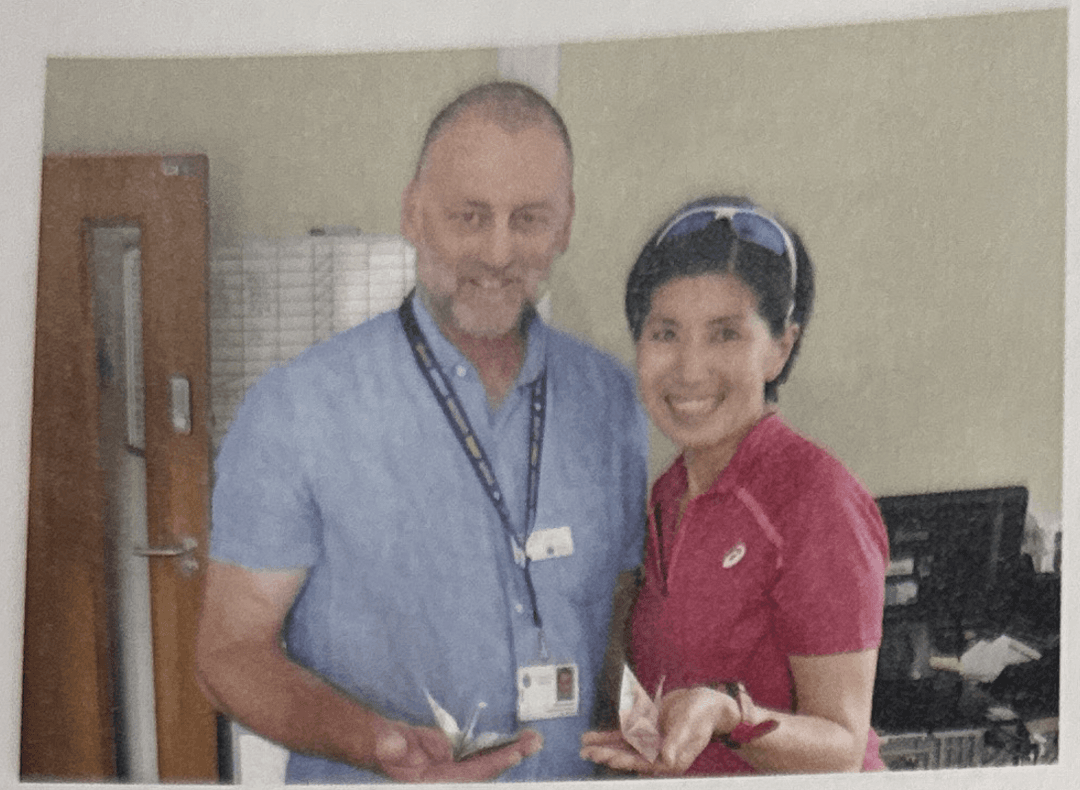
With Simon Roby, lead complementary medicine therapist at St. Joseph Hospice
I'm currently reading "Clinical Aromatherapy" (Fragrance Journal, 2015) with Dr. Izumi Kubota, an aromatherapist and pharmacist, and my classmates. Dr. Kubota proposes aromatherapy with as few negative aspects as possible. Furthermore, he emphasizes safety and advocates the practice of aromatherapy from a holistic perspective. In the UK, particularly in nursing and care settings, this holistic aromatherapy supports patients throughout their life journey by treating them as individuals, not just patients.
St. Joseph's Hospice in central London also provides a space where outpatients and residents can receive various complementary medicines, including aromatherapy, free of charge. At this hospice, nurses also support the activities of complementary medicine therapists in case of emergency. Simon Robbie, a leading complementary medicine therapist, stated, "Complementary medicine not only improves quality of life, but also contributes to individual well-being." Perhaps influenced by these British achievements, more and more Japanese facilities are gradually introducing aromatherapy. However, aromatherapy still feels somewhat out of the loop in Japan.
I believe the most important thing going forward is to establish the professional status of aromatherapists at the national level. I also believe we should encourage aromatherapists to work not only in private hospitals and private facilities, but also in municipal facilities. To achieve this, a system for the government to support the securing of a workforce for nursing and caregiving is urgently needed. Japan is becoming a super-aging society, with fewer young people. Utilizing skilled foreign nurses and other professionals in caregiving could alleviate the labor shortage, free up staffing, and potentially increase momentum for the adoption of aromatherapy as a complementary medicine.
Considering the situation in the UK, I think that Japan will also be further considering the introduction of aromatherapy, which enhances the body's natural healing powers, as it deals with the 2025 problem, which will pose challenges in terms of nursing care and medical costs, and the super-aging society.
I believe aromatherapy not only improves quality of life (QOL), but also helps improve quality of death (QOD). QOD is an essential element of a happy death. Death comes to everyone. That's why, as I approach death, I hope to depart this world surrounded by scents that evoke fond memories. I believe aromatherapy can enhance a sense of happiness as one approaches death. If more people choose to end their lives this way and aromatherapy becomes more familiar in the near future, I believe the future will be brighter.
Written by Yoko Kijima for Aromatopia